
Natural Science
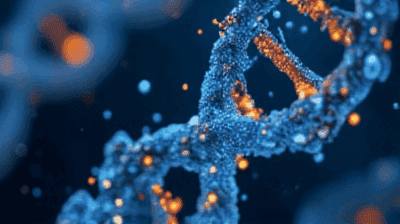
CRISPR Gene Editing: Can We Rewrite DNA to Cure Diseases?
The field of genetics has seen monumental advances in recent years, with one of the most significant breakthroughs being the development of CRISPR gene editing technology. CRISPR, which stands for Clustered Regularly Interspaced Short Palindromic Repeats, has revolutionized our understanding of genetics and opened new avenues for treating diseases, from genetic disorders to certain types of cancer.

The Science of Cooking: How Maillard Reactions Make Your Food Delicious
Cooking is often seen as an art, but it is deeply rooted in science. One of the most fascinating chemical processes that occurs during cooking is the Maillard reaction, a complex series of reactions that not only enhances the flavor and aroma of food but also contributes to its color and texture.
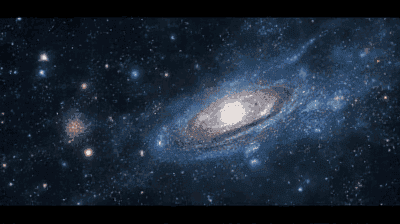
Dark Matter & Dark Energy: The Invisible Forces Shaping the Universe
The universe is a vast and mysterious expanse that continues to baffle scientists and astronomers. While we can observe stars, galaxies, and nebulae, much of the cosmos remains hidden from our direct perception. Two of the most enigmatic components of the universe are dark matter and dark energy. Together, they constitute about 95 percent of the total mass-energy content of the universe, yet they are largely invisible and undetectable through conventional means.
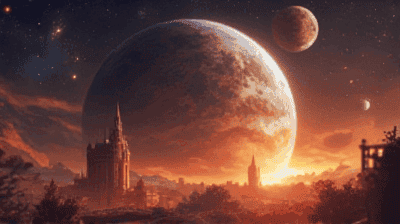
Exoplanets: How Scientists Discover Alien Worlds Light-Years Away
The quest to explore the universe beyond our own solar system has captivated humanity for centuries. With the advancement of technology and astronomical techniques, scientists have made remarkable strides in their search for exoplanets—planets orbiting stars outside our solar system. The discovery of these alien worlds not only deepens our understanding of the cosmos but also raises profound questions about the potential for life beyond Earth.
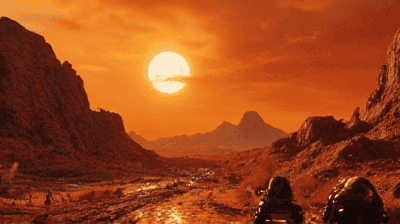
Mars Colonization: What Challenges Must We Overcome to Live on the Red Planet?
Mars, the fourth planet from the sun, has long captured the imagination of scientists, explorers, and dreamers alike. With its striking red color and Earth-like features, it tantalizes us with the possibility of colonization. Efforts are underway by national space agencies and private companies to explore Mars and eventually establish a human presence there. However, colonizing the Red Planet comes with formidable challenges, ranging from harsh environmental conditions to technological hurdles.
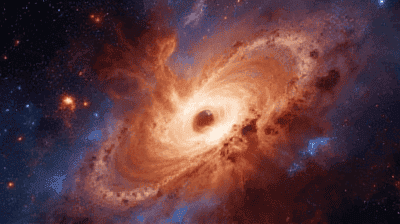
The Life and Death of Stars: From Nebulas to Supernovas and Black Holes
Stars are the building blocks of the universe. They illuminate the night sky, providing a spectacular display and playing a fundamental role in the cosmos. However, the life cycle of a star is a magnificent journey that begins in the depths of a nebula and can end in spectacular fashion as a supernova or a black hole.
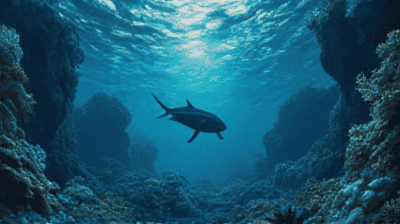
The Deep Ocean: Discoveries from Earth's Last Unexplored Frontier
The deep ocean, covering more than 60 percent of our planet's surface, remains one of Earth's last unexplored frontiers. Despite its vastness and significance, the depths of the ocean are shrouded in mystery. From bizarre creatures thriving in extreme environments to unique ecosystems that play a crucial role in global climate regulation, the deep ocean is teeming with life and potential discoveries.
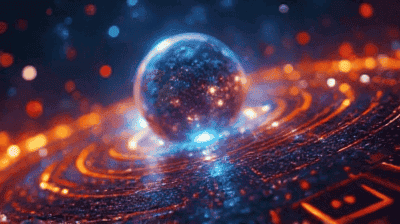
Earth's Magnetic Field: How It Protects Us and Why It's Flipping
Earth's magnetic field is one of the planet's most important protective mechanisms, shielding us from the harmful effects of solar and cosmic radiation. This invisible force is generated by the movement of molten iron in the Earth's outer core and extends from the Earth's interior out into space. While many people are aware that the magnetic field affects navigation for compasses and certain animals, its role in protecting life on Earth is often overlooked.
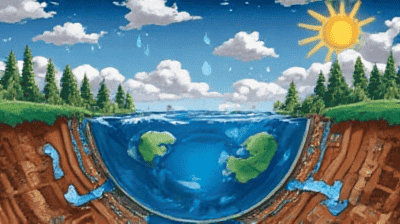
The Water Cycle: From Evaporation to Rainfall – How Water Shapes Our Planet
Water is one of the most essential substances on Earth, shaping our planet's landscapes, ecosystems, and climates. The water cycle, also known as the hydrological cycle, describes the continuous movement of water in its various forms—liquid, solid, and gas—through the environment. This complex and dynamic process plays a critical role in sustaining life and influencing weather patterns.
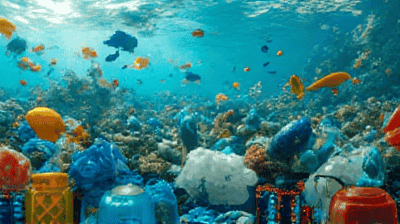
Plastic Pollution: How Polymers Are Made and Why They Don't Easily Degrade
In recent decades, plastic pollution has emerged as one of the most pressing environmental challenges facing our planet. As the world grapples with the consequences of plastic waste, understanding how polymers are made and why they persist in the environment is crucial.
The Science of Aging: Why Do We Grow Old, and Can We Slow It Down?
Aging is a universal and inevitable process that affects all living organisms. While we each experience the passage of time and its effects uniquely, the underlying mechanisms of aging have fascinated scientists and philosophers throughout history. As we strive to understand the science of aging, we are confronted with profound questions: Why do we grow old? What biological processes drive aging? And most importantly, can we slow it down or even reverse some aspects of it?
Einstein's Relativity in Everyday Life: From GPS to Gravitational Waves
When we think of Einstein, we might picture a wild-haired genius scribbling equations on a chalkboard. However, the theories he developed over a century ago profoundly influence our everyday lives in ways we might not even realize. Albert Einstein's theories of relativity—special relativity and general relativity—revolutionized our understanding of space, time, and gravity. From the technology that powers our navigation systems to the fascinating phenomenon of gravitational waves, relativity plays a pivotal role in modern science and technology.